

The Ultimate Guide to Sales Process Consulting: How to Transform Any Team with the BOOST Framework
Dec 25, 2025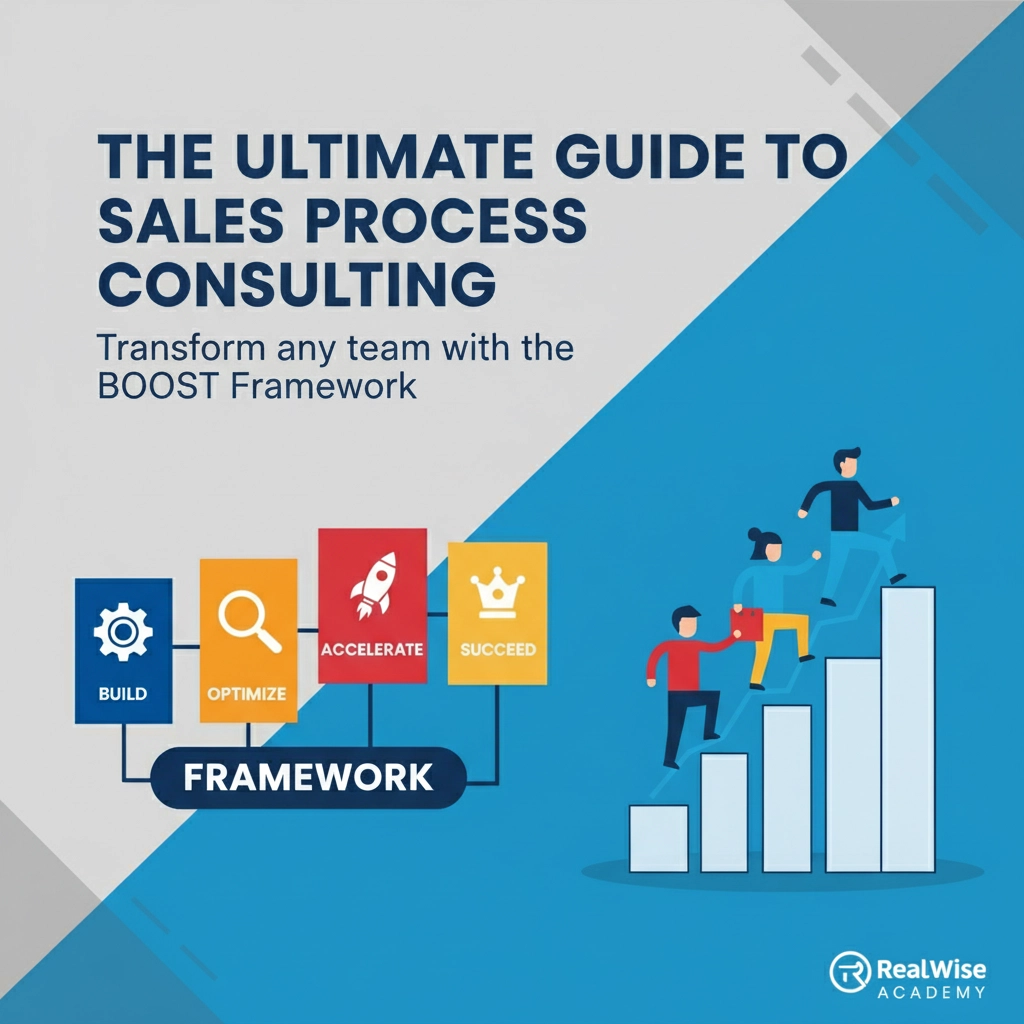
Want to know the brutal truth about sales teams? Most are flying blind.
They're working harder, not smarter. Chasing every lead that breathes. Burning through reps faster than a startup burns through venture capital. And wondering why their numbers look like a roller coaster designed by someone having a really bad day.
Here's what's happening: Your sales process isn't broken, it never existed in the first place.
Sure, you might have a CRM. Maybe even some fancy automation tools. But without a systematic, science-backed approach to sales process consulting, you're basically hoping your team stumbles into success. And hope, as they say, is not a strategy.
That's where the BOOST Framework comes in.
Why Traditional Sales Process "Fixes" Fall Flat
Let’s start with a few truths you can take to the bank:
- Companies with a formal, defined sales process generate more revenue than those without one (Harvard Business Review).
- Teams that mature their enablement and standardize how they sell see materially higher results: +17.9% win rate and +11.8% quota attainment (CSO Insights, 2019).
- Reps spend only about 28% of their time actually selling due to tool overload and admin work (Salesforce State of Sales).
- Fewer than half of sales leaders trust their forecast accuracy, largely because of messy data and inconsistent process (Gartner).
Sound familiar? That’s why “buy another tool” or “hire a hero seller” doesn’t move the needle. Those are patches, not a plan.
You need a simple, science-backed operating system your whole team can run the same way—every day. That’s why we built BOOST.
Sources: Harvard Business Review (https://hbr.org/2015/01/companies-with-a-formal-sales-process-generate-more-revenue), CSO Insights 2019 (https://community.highspot.com/wp-content/uploads/2019/10/CSO-Insights-5th-Annual-Sales-Enablement-Study.pdf), Salesforce State of Sales (https://www.salesforce.com/resources/research-reports/state-of-sales/), Gartner (https://www.gartner.com/en/newsroom/press-releases/2020-02-12-gartner-says-less-than-50--of-sales-leaders-and-selle)
The BOOST Framework: Your Roadmap to Sales Transformation
BOOST is our science-backed, field-tested operating system for revenue teams. Run these five moves in order:
- Build trust
- What to do: Lead with proof, empathy, and clarity. Set a simple discovery agenda. Respond fast and follow through.
- Practical example: A real estate team opens discovery with, “In 20 minutes we’ll confirm goals, budget, and timeline—and if it’s not a fit, I’ll point you to a better option.” Trust earned, pressure lowered.
- Observe needs
- What to do: Map the buyer’s job-to-be-done. Confirm budget, authority, need, and timing without interrogation.
- Practical example: A medical device rep runs a 6-question diagnostic around current workflow, failure costs, and decision criteria, then mirrors back the top three business pains with numbers.
- Offer irresistibly
- What to do: Package one “Prime” option and two flanking options. Anchor ROI. Remove friction with clear next steps.
- Practical example: A SaaS founder quotes “Prime” with quantified payback in <6 months, includes a risk-reversal clause, and provides a 2-slide mutual action plan.
- Secure the deal
- What to do: De-risk decisions. Use mutual close plans, stakeholder maps, and pre-agreed stage exit criteria.
- Practical example: A roofing contractor sets a close plan with the homeowner and insurer, pre-books inspection, and blocks install dates pending adjuster sign-off.
- Track progress
- What to do: Instrument your funnel. Review stage-to-stage conversion weekly. Coach against data, not vibes.
- Practical example: An insurance brokerage tracks time-in-stage and win rate by source. If “Proposal” stalls >7 days, an automated “Value Recap + Risk Reversal” email goes out and a manager review is triggered.
Want the deeper dive? We unpack each step—scripts, templates, and case studies—in the BOOST book and training.
The Science Behind Sales Process Transformation
Here’s the data that backs the BOOST principles:
- Formal, defined sales processes correlate with higher revenue growth (Harvard Business Review: Companies with a Formal Sales Process Generate More Revenue).
- Mature enablement and standardized selling lift performance: +17.9% win rate and +11.8% quota attainment (CSO Insights, 2019).
- Sellers spend only ~28% of their time selling; consolidating tools and standardizing workflows gives that time back (Salesforce State of Sales).
- Fewer than 50% of sales leaders trust forecast accuracy—consistent process and clean data improve confidence (Gartner).
- Sales cycles are roughly half as long with existing customers vs. new logos (3.8 vs. 7.2 months), so segment your process accordingly (CSO Insights 2018–2019 summary).
- Automation and focus on high-value work increase capacity 20% and can boost productivity 10–30% (McKinsey).
The bottom line: fragmented, one-off “fixes” underperform. BOOST ensures your improvements connect end‑to‑end, so momentum compounds.
Sources: HBR (https://hbr.org/2015/01/companies-with-a-formal-sales-process-generate-more-revenue), CSO Insights 2019 (https://community.highspot.com/wp-content/uploads/2019/10/CSO-Insights-5th-Annual-Sales-Enablement-Study.pdf), Salesforce (https://www.salesforce.com/resources/research-reports/state-of-sales/), Gartner (https://www.gartner.com/en/newsroom/press-releases/2020-02-12-gartner-says-less-than-50--of-sales-leaders-and-selle), Kapta summary (https://kapta.com/resources/key-account-management-blog/key-account-management/quick-summary-of-the-cso-insights-2018-2019-sales-performance-survey), McKinsey (https://www.mckinsey.com/capabilities/growth-marketing-and-sales/our-insights/how-top-performers-outpace-peers-in-sales-productivity)
Step-by-Step BOOST Implementation Strategy
Ready to transform your team? Follow this 10-step, week-by-week plan.
- Map reality (Weeks 1–2)
- Capture your actual stages, conversion rates, time-in-stage, and win rates by source/segment. Separate new logo vs. existing customers—their cycles are different.
- Quick win: Interview 5 recent wins and 5 losses. Ask “What almost stopped you?” Patterns will jump out.
- Define your stage gates (Weeks 1–2)
- Replace fuzzy labels with objective exit criteria. Example: “Qualified” = problem confirmed, budget range aligned, decision process mapped, next meeting booked.
- Build trust scripts and assets (Weeks 2–3)
- Draft a 3-step discovery agenda, proof points, and a 1-page “Value Recap” template. Keep language human and direct.
- Observe needs with a shared checklist (Weeks 3–4)
- Create a 6–10 question diagnostic that every seller uses. Store answers in CRM fields—not notes—so you can analyze later.
- Offer irresistibly with a standard package (Weeks 4–5)
- Create a Prime + two flanking options. Add a mutual action plan (MAP) slide to every proposal. Anchor on quantified outcomes.
- Secure deals with a close plan (Weeks 5–6)
- For opportunities above your median deal size, require a MAP with owner, dates, and stakeholder list. Review MAPs in pipeline meetings.
- Automate the obvious (Weeks 6–7)
- Route leads instantly, trigger “Value Recap” emails after discovery, and create task sequences for stalled deals at each stage.
- Organize handoffs (Weeks 7–8)
- Define marketing→SDR→AE→CS handoffs with SLAs and acceptance criteria. No handoff without a filled diagnostic and next meeting on the calendar.
- Coach to the data (Weeks 8–10)
- Weekly: review stage-to-stage conversion and time-in-stage. Manager asks, “What must happen to exit this stage?” Coach behaviors, not feelings.
- Track and iterate (Quarterly)
- Run a quarterly “BOOST audit”: which step is weakest? Tackle one constraint per quarter. Rinse and repeat.
Examples across industries:
- Insurance: Use a 7-question risk diagnostic; send same-day “Coverage Gaps + Savings” recap; 2-option offer with deductible choice.
- SaaS: Standardize discovery by persona; require MAP before procurement; automate a 3-touch “stalled at Legal” sequence.
- Roofing/Home Services: Pre-book inspection and tentative install dates; photo report recap within 24 hours; close plan includes HOA/permit steps.
Pro tip: Align this plan with the BOOST book’s playcards so onboarding and coaching stay plug‑and‑play.
Common Implementation Pitfalls (And How to Avoid Them)
Even the best frameworks can fail with poor execution. Avoid these:
- Changing everything at once
- Fix one constraint at a time. Ship it. Measure it. Then move on.
- Underestimating resistance
- Involve your veterans early. Let them co-create stage criteria and scripts. Celebrate their early wins publicly.
- Skipping training and coaching
- New process = new skills. Formal enablement and coaching correlate with lower turnover and higher performance (CSO Insights 2018). Train, certify, and refresh quarterly.
- Measuring activity over outcomes
- Calls and emails are inputs. Prioritize stage conversion, time-in-stage, win rate, and forecast accuracy.
- Dirty data, shaky forecasts
- If it isn’t in the CRM field, it didn’t happen. Standardize data entry at each stage; audit weekly. Confidence follows consistency (Gartner).
Your Next Steps
Sales process transformation isn’t optional anymore—it’s your competitive edge. The BOOST Framework gives you a simple, repeatable way to build trust, observe needs, make irresistible offers, secure deals, and track progress.
- Grab the playcards and tools in our BOOST book and training.
- Explore the templates and case studies in our Knowledge Vault: Knowledge Vault.
- Share your story below: What’s the one bottleneck you’ll fix first?
- Subscribe for weekly BOOST tips. We hate SPAM. We will never sell your information, for any reason.
Your sales transformation starts now. #BOOST #SalesProcess #RevenueOperations #SalesEnablement #RealWiseAcademy
Like our blogs? Stay connected to the new blogs that come out and other business and real estate news !
Join our mailing list to receive the latest news and updates from our team.
Don't worry, your information will not be shared or sold (who would do that anyways...)!
We hate SPAM. We will never sell your information, for any reason.
